How to survive official Rust as a solo with the habits of a 14,782-hour veteran
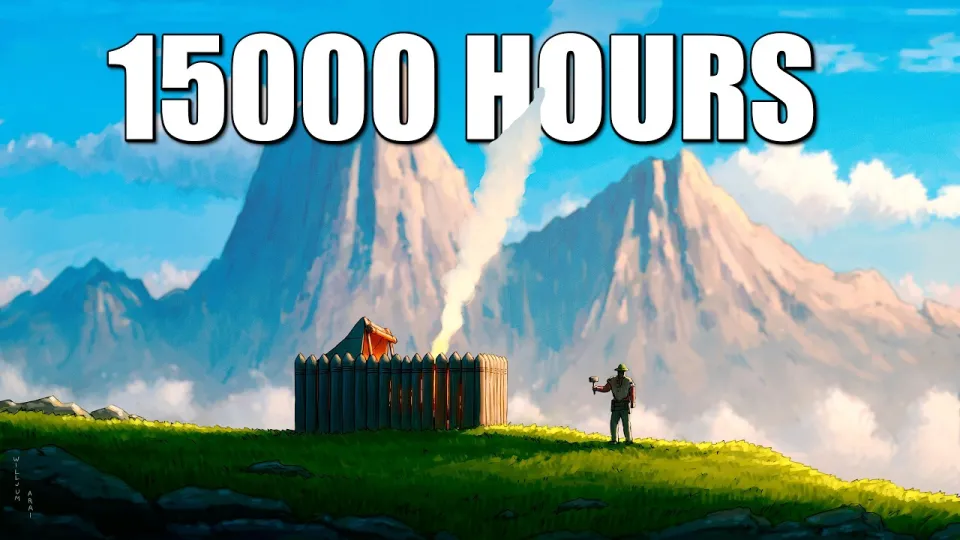
Video: How a solo with 14,782 Hours plays official rust...
Need articles like this for your video? They help promote it on YouTube and Google — order them in the Telegram bot @sat_sit_bot. Articles with your video embedded are written and posted by the bot itself — on popular topical sites (no ads). Your first 50 articles are free.
· based on the channel Willjum
Surviving official Rust as a solo comes down to three habits: keep the base small and hidden, spend the first hours of a wipe on tools and a safe respawn rather than fights, and treat every scrap and every gun as a resource you cannot afford to lose carelessly. A player with 14,782 hours in Rust does not win because of aim alone — the advantage is in routing, timing, base placement and knowing when not to take a fight. Willjum's solo run on an official server is a practical demonstration of those habits, and the same episode is sponsored by Manscaped, where the code shown in the video unlocks a discount at the Manscaped page for Willjum's viewers.
What 14,782 hours actually means in Rust
Fourteen thousand seven hundred and eighty-two hours is not a flex, it is a map of the game's systems learned by repetition. Spread across Rust's lifetime since early access, that total works out to roughly 1,180 hours a year for over twelve years, or close to 1,850 hours a year if you count only from the 2018 full release — more than most part-time jobs. In practice that history shows up as small decisions: which monument to hit first, where a fight will rotate, how long a raid usually takes to arrive after a base is spotted.
For a solo player, the value of experience is mostly defensive. A veteran does not need to win every fight; they need to avoid the fights that cost a base. That is the difference between a wipe that ends on day one and a wipe that lasts two weeks.
The solo survival checklist for an official wipe
Official Rust is the least forgiving ruleset: vanilla gather rates, no team, and every death drops your entire inventory. A solo run survives on preparation done before the first contact.
- Land away from the crowd. A solo base belongs in a low-traffic area with a monument within a short run and enough cover that a passing duo does not see the door. Cliffside and forest spots beat open fields.
- Build small first. A 2x1 or 2x2 with an airlock, stone walls and a metal door costs little and protects everything. Expand only after the first night survives.
- Secure a respawn. A sleeping bag inside the base and a second one hidden nearby turns a death into a five-minute setback instead of a wipe.
- Farm tools before weapons. Pickaxe, hatchet, bow and a workbench level one unlock everything else. A crossbow and a nail gun are enough for the first day.
- Bank your scrap. Spend on blueprints and a workbench, not on gambling at the bandit camp. Scrap is the currency of progress for a solo, and losing it in a fight hurts more than losing a gun.
- Move with a purpose. Every trip out has a target — a crate, a monument, a node cluster — and a route back that avoids the roads where groups roam.
Base design and the small tricks that buy time
A solo base is a delay device, not a fortress. The build used in the video comes from the builder Luca.Builds, and the design leans on deception as much as on walls: a mannequin placed in a window draws fire and attention away from the real entrance, and honeycomb around the core forces raiders to spend more explosives than the loot is worth.
Practical rules that hold on any official server:
- Put the tool cupboard behind at least one wall of honeycomb, not directly behind the front door.
- Keep the loot room off the main corridor; raiders who blow straight through the entrance should find an empty room.
- Use sheet metal doors on the outside and garage doors where the space allows — a garage door costs more to break than its price suggests.
- Never store all your sulfur, scrap and guns in one box. Spread the value.
- Log out inside the core, never in the airlock or on the roof.
Scrap discipline, weapons and the fights a solo should refuse
The running joke around long-time solo players is that they claim to avoid spending scrap on weapons while quietly crafting their twentieth nail gun of the wipe. The underlying point is real: a solo's economy is fragile, and every crafted gun is scrap that did not become a blueprint.
A workable priority order for the first days on official:
- Workbench level one and the core blueprints (bow, crossbow, nail gun, medical syringe, metal tools).
- Workbench level two once scrap allows, then the tier-two weapons you actually use.
- Armor and meds before optics. A player who survives a fight with 30 HP and no medkit loses the loot anyway.
As for PvP, the veteran habit is selectivity. A solo should take fights where the numbers are even or better, where the enemy is already hurt, or where the reward is a full kit near your own base. Jumping a group of two or three with a bow works in highlight videos and rarely in a real wipe — the risk is not the death, it is the grudge and the raid that follows.
Common doubts from players trying official Rust solo
"Isn't 14,782 hours basically a full-time job?" It is, and that is exactly why the habits transfer better than the aim. Nobody can copy the hours, but anyone can copy the routine: small base, early bags, scrap banked, fights chosen.
"Can a new player survive on a 1,000-population vanilla server?" The wipe-day experience is brutal — a geared player, a naked with a bone knife and a crossbow duo can all end your run within minutes. The realistic path is to start on a lower-population vanilla server or a 2x server, learn the monuments and the building costs, then move to high-pop official when the routine is automatic.
"Why does the solo always seem to hear footsteps but miss the bear?" Sound is the most underrated skill in Rust. Headphones, a quiet room and the habit of stopping to listen before looting a crate matter more than a good mouse.
"Is the peaceful farmer persona real?" Long-time viewers of these runs tend to agree it is a bit: the calm narration hides a player who will absolutely take a fight when the odds are right. The persona is part of the entertainment, not a strategy guide.
Where to find Willjum's servers and links
All official links from the video, exactly as listed:
- Manscaped offer: https://manscaped.com/willjum
- Patreon: https://www.patreon.com/Willjum
- Twitch: https://www.twitch.tv/willjum
- Twitter: https://twitter.com/willjum1
- Creative Commons license referenced for the music: http://creativecommons.org/licenses/by/4.0/
Willjum also runs community servers announced in the video description, including solo-only Thursdays on willjum.eu (EU) and willjum.us (NA), casual duo monthly servers on monthly.willjum.eu and monthly.willjum.us, a 1.5x trio Thursday server on modded.willjum.eu, 2x trio Mondays on 2x.willjum.eu and 2x.willjum.us, and 3x Fridays on 3x.willjum.us. These are the practical middle ground for a player who wants the Rust loop without the full official grind.
Final takeaway
Surviving official Rust as a solo is a discipline problem before it is a skill problem: a hidden base, a banked stock of scrap, a respawn ready and a short list of fights worth taking will outlast raw aim almost every wipe. The 14,782-hour account in Willjum's breakdown is proof that the routine, not the reflexes, is what compounds over years. Watch the full run on the Willjum channel for the pacing and the decision-making in context, and if you want the sponsor offer from the episode, use the Manscaped link from the video before your next wipe starts.
Key takeaways
- Willjum's account shows 14,782 hours in Rust, roughly 1,180 hours per year if spread over 12.5 years since early access.
- The run is played solo on an official server, the harshest environment in Rust: no team, no group farming, full loot loss on death.
- The base build in the video comes from the builder Luca.Builds, and a mannequin placed in a window was used to draw enemy fire.
- Scrap discipline matters more than aim for a solo: the video's running joke is a player who avoids buying weapons while crafting nail gun after nail gun.
- Willjum's own servers (solo-only Thursdays, casual duo monthly, 1.5x trio, 2x and 3x events) are listed in the video description for players who want a softer start.
Source: How a solo with 14,782 Hours plays official rust... · Markdown version
Questions & answers
How many hours do you need in Rust to survive as a solo on official servers?
There is no threshold, but the useful part of a 14,782-hour account is routine rather than aim. A player with a few hundred hours can survive by building small, banking scrap early and refusing fights they cannot win. The hours mainly shorten the learning curve for monuments, building costs and rotations.
Is it realistic to start Rust on a high-population official vanilla server?
It is possible but punishing. On a 1,000-player wipe day, a solo can lose a full kit to a geared player or even a naked with a bone knife within minutes of leaving the base. Most players learn faster on a lower-population vanilla or 2x server and move to official once the first-day routine is automatic.
What should a solo player spend scrap on first in Rust?
Workbench level one and the core blueprints come first: bow, crossbow, nail gun, metal tools and medical syringes. Tier-two weapons and armor follow once scrap is banked, and gambling at the bandit camp is a trap for a solo economy. Scrap lost in a fight costs more progress than a lost gun.
What base design keeps a solo alive longest on official Rust?
A small stone core with an airlock, honeycomb around the tool cupboard and the loot room off the main corridor forces raiders to spend more than the base is worth. Decoys help too — the build in Willjum's video, made by Luca.Builds, uses a mannequin in a window to draw fire away from the real entrance.